

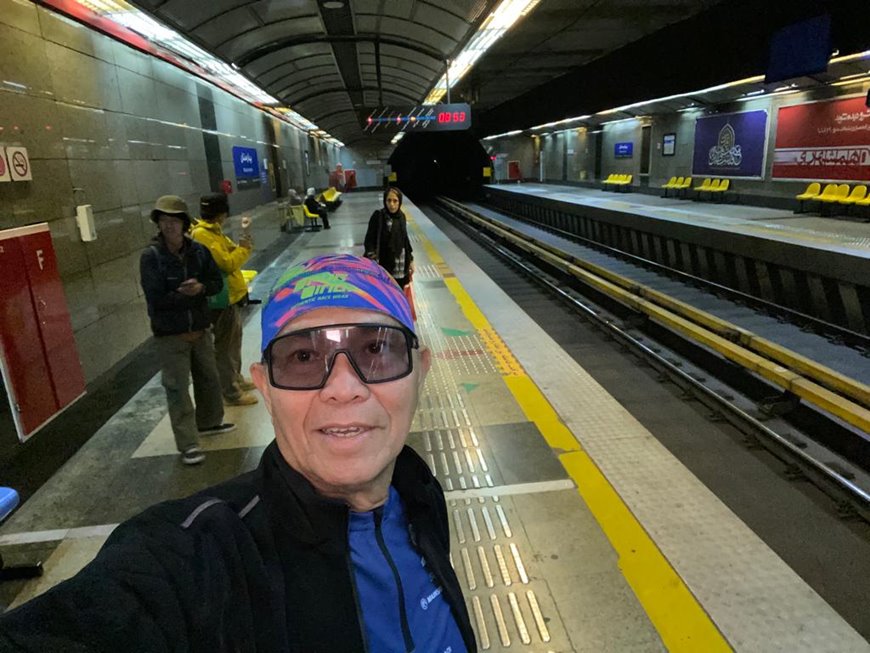
Being in Tehran, the capital of Iran, was truly fascinating. This city has great public transportation. Travel to all corners is always connected by subway. The waiting time is not too long either. No more than two minutes for the next train to arrive. But, the crime rate is quite high. I lost some of my belongings due to theft.
My crew and I arrived in Tehran on 2 November 2023, at around 20:30 (8:30 p.m.) local time. That night, we stayed at the Hotel Iriano. The vehicle parking lot is located on the ground floor. However, the entrance to the parking lot is quite narrow and low, making it difficult for our car, a Toyota Hilux double cabin vehicle, to enter.
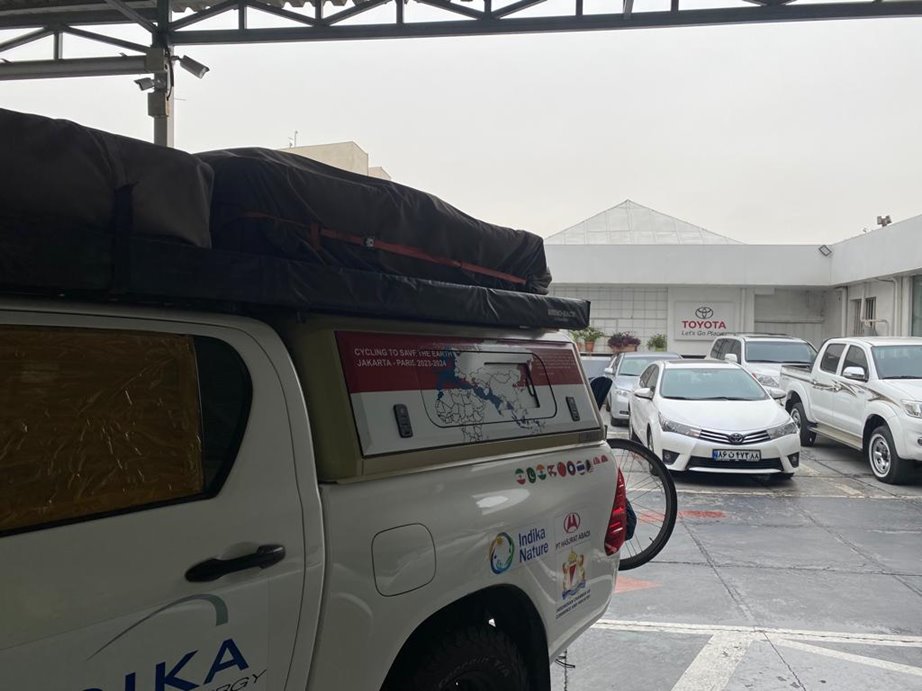
We parked the car in front of the hotel. It happens that there is a small area that is quite ideal. For that night, the car was in a safe spot. So, we decided to continue parking the car in the same location for the next night, 3 November.
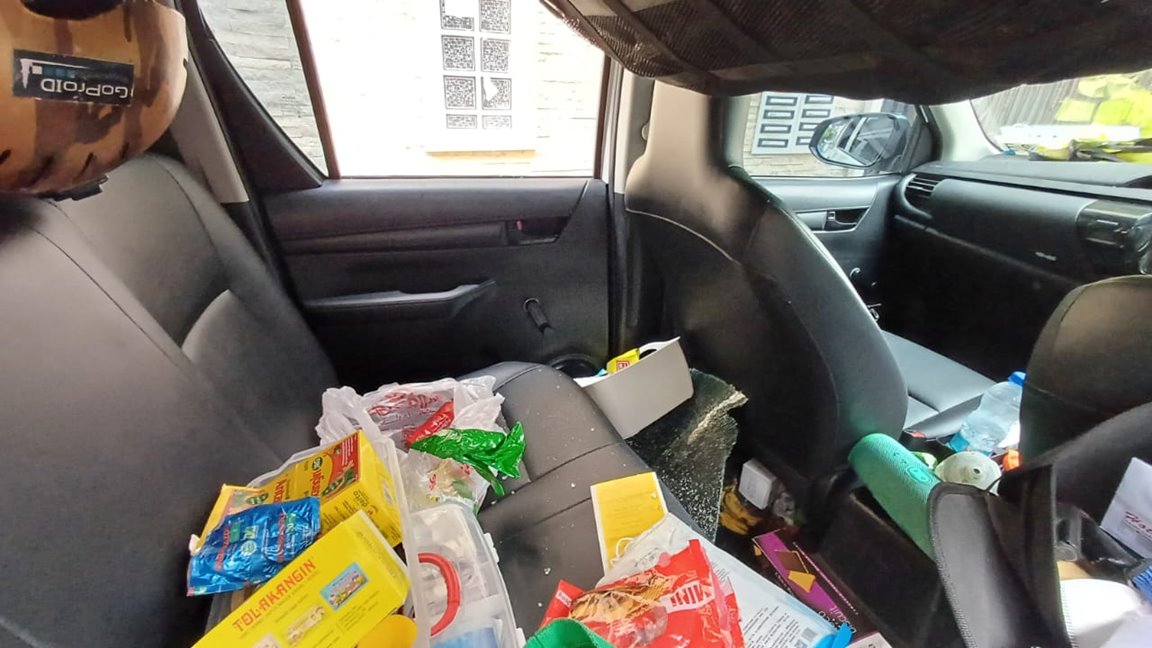
Broken car window
The next morning, which was 4 November 2023, when we were about to wash the car, we saw that the car’s right-side window was broken. This incident really surprised us. A number of items were scattered on the car seat. There were also some items missing, taken by thieves.
The missing items were a drone – in damaged condition because one of the propellers is not perfect – and related chargers and batteries.
We reported the incident to the hotel staff. We asked for access to see the CCTV security cameras. However, the Hotel Iriano staff informed us that, even though we had parked the car right in front of the hotel, that spot was actually not on hotel property so no CCTV had been installed to cover that area.
They promised to report the case to the local police. After waiting for a long time, the police did not come. Finally, we decided to find an official Toyota workshop to repair the damage.
We got the window replaced on the same day. The cost was not much different from what it is in Jakarta and surrounding areas.
Changed hotels
The incident made us more vigilant. After finishing at the workshop, we decided to move to a new place to stay. That night we stayed at a budget hotel, called Heritage Hostel, that caters specifically to backpacker tourists.
This place is quite interesting and strategic. Located in the center of Tehran, close to the subway station (MRT) and shopping districts, it is in high demand. The daily occupancy rate reaches 84 percent.
Heritage Hostel is very popular among backpackers from various countries. There, we met travelers from China, Malaysia, Switzerland, Russia, Germany and many other countries.
Room prices were also friendly, ranging from IDR 300,000 to IDR 500,000 (USD20-33) per room per night. What’s interesting is that there are rooms available with one bed. But there are also those that are filled with three to five bunk beds so they can accommodate 10 people.
For rooms occupied by more than two people, the price is calculated per guest. The price is still affordable. The hostel staff were very friendly, communicative and skilled.
Taking the toll road
In Iran, the weekend occurs on Friday and Saturday. For three days, we were busy processing European entry visas at the French Embassy in Tehran with VFS Global. VFS Global is a third-party tasked by the European Union to handle visas.
Over the following days, we traveled to the city of Chalus on the shore of the Caspian Sea. The distance between Chalus and Tehran is about 150 kilometers. However, the trip there passes through mountains as high as 3,200 meters (10,400 feet) above sea level.
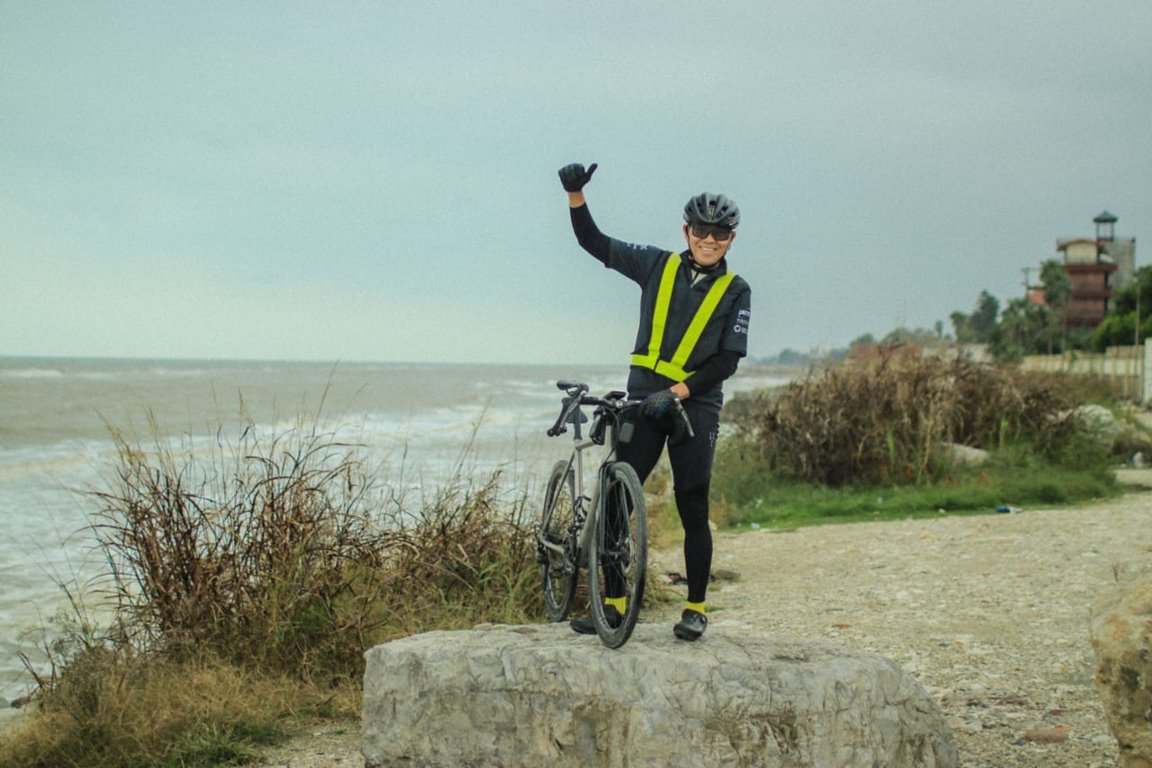
On Wednesday, 8 November 2023, I started out pedaling my bicycle along the toll road. At the 40-kilometer point, the road was closed due to repairs. We returned again to Tehran.
The following morning, I cycled again along the same toll road. When you enter the toll gate, it’s safe. However, once I got to Kilometer 50, an officer suddenly stopped me and forbade me from continuing cycling. Toll roads are only for motorized vehicles, not bicycles.
This prohibition was a bit surprising, because when I entered the toll booth, the officer let me cycle. Instead of arguing for a long time, I decided to put my bicycle in the accompanying car to continue my journey to Chalus.
That night, we stayed at a homestay. This accommodation was cheap, but poorly maintained, making it uncomfortable. The next day, we changed lodgings and moved to the modest Hotel Fander.
The Caspian Sea
The location of this hotel is not far from the shore of the Caspian Sea. The beach is not very beautiful, because it is the estuary of a river. This river is also not clean, because it carries quite a lot of rubbish, including used wood. The wood is collected by local residents for various purposes.
The Caspian Sea is actually a lake, with parts of the shoreline like sandy beach. This lake is located between Europe and Asia, southwest of the Ural Mountains. It covers approximately 390,000 square kilometers. These waters stretch for 1,030 kilometers from north to south and 200-400 kilometers from west to east.
A total of 130 rivers flow into the Caspian Sea. The main water supply comes from the longest river in Europe, the Volga River, which empties at the northern tip. The Ural River flows in from the northeast, and the Kura River from the west. In the north, the water is fresher, while as you go south, it becomes more brackish. The saltiest part is in Iran.
Passport issues
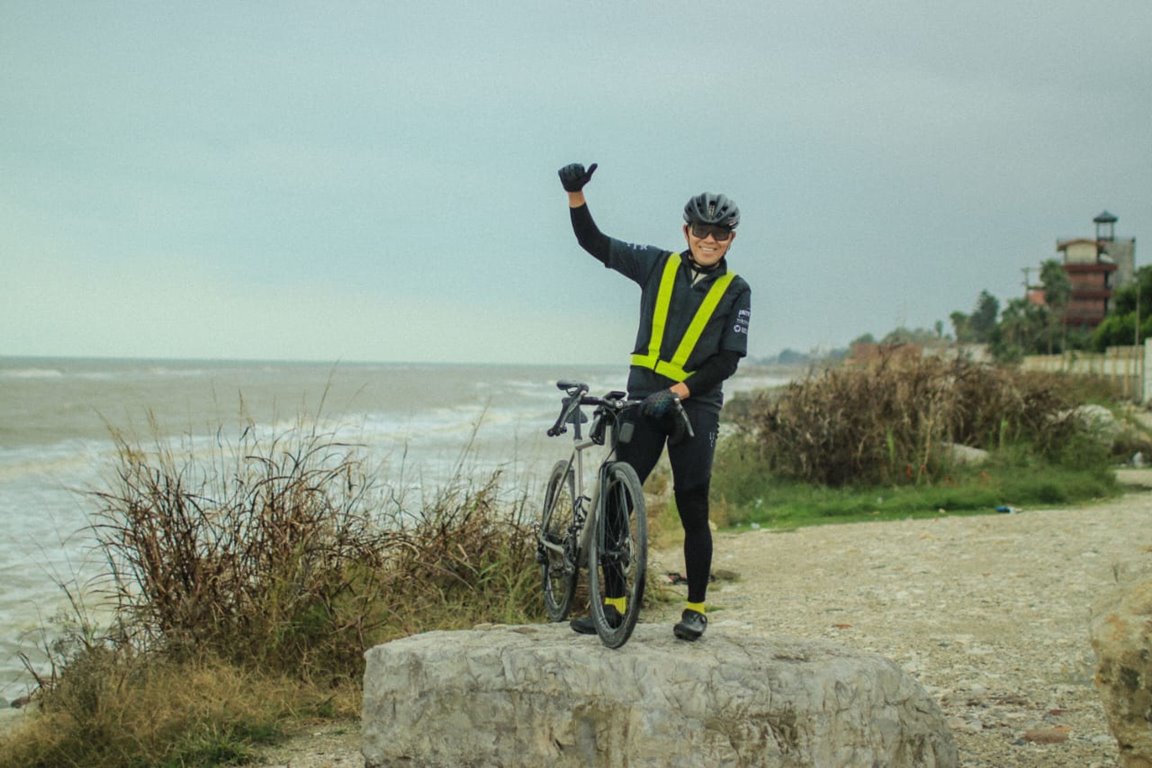
On the morning of November 11, 2023, I rode my bicycle around Chalus City. After riding for only about 10 kilometers, suddenly a policeman stopped me. He warned me not to take pictures of the city.
Not long after, the policeman asked for my passport. I reported that the passport was kept at the Fander Hotel. I then showed him a photocopy. But the policeman rejected it. He asked me to show my physical passport.
The policeman then asked me to go to the local immigration office, which was not far from where we were standing. I contacted “Uncle” Yayak to say that I was with an Iranian policeman heading to immigration because I didn’t have my original passport. I also asked Yayak to come to the hotel to get my passport and bring it to the immigration office.
At the immigration office, the officers asked again for my passport. I showed them the photocopy, and again they objected. They insisted on the physical passport. Not long after, Yayak arrived at the immigration office.
What made the clarification take so long was that my passport and visa were not registered with Iranian immigration. I then explained the chronology of entering Iranian territory via the Mirjaveh border, where we were detained for approximately 27 hours because the immigration computer system was damaged. After that, we finally could enter Iran, but all the details got recorded manually. (See earlier episode for details.) It seems that after the computer system was restored, the immigration officers in Mirjaveh did not enter our data into the system, which caused this problem. It took us two hours to clarify this at the Chalus immigration office.